Recordings of Scientific Events
Halley’s Comet brushed past the earth with its tail on 19th May 1910. When spectroscopic analysis found the toxic gas Cyanogen in the tail of Halley’s Comet, people panicked and bought gas masks, quack “anti-comet” pills, and “anti-comet” umbrellas. When a large section of the Western world saw this as a sign of impending doom, it is surprising how Bharathi saw this to be a cause of many marvels. Bharathi composed The Comet (சாதாரண வருஷத்துத் தூமகேது) in March 1910. He says: “You range over countless millions of yojanas[2] They say your endless tail is wrought of gas, the softness of which is indeed peerless. They say that your tail touches the earth too and you fare forthwith no harm to the poor The wise talk of your myriad marvels!”[3] After putting forward so many questions, he concludes: “It is a rule with you to appear once in a cycle of seventy-five years This time you will cause many marvels, they say. I ask of you, if this be true or false.”[4] Indeed, Halley’s Comet appears once every seventy-five years, on average. It will next appear in the night sky in the year 2061. It orbits the sun every seventy-five or seventy-six years, so this is the time between appearances. Bharathi has written a poem on Sirius (திசை)[5] —the brightest star in the constellation Canis Major—on 3rd April 1909: “In one moment, light travels, the scholars say, nineteen thousand katam[6]; such is its speed; It is indeed difficult to comprehend it. The sun’s light reaches us in eight minutes. Westerners speak of a star called Sirius; it is reckoned that its rays, travelling at the same speed take three years to reach this mandala, the earth; If so, is it easy for thought to fix its distance? Oh men, hear this! This star among the innumerable stars, it is said, is nearest to the earth – a mere millet. Again there is a star whose rays take three thousand light years to reach the earth. Know that the human insects with manifold pains devised but defective instruments to discover these (stars). And there are billions and billions of stars far, far away That cannot be spotted through these tools at all. The bird of intellect that soars, returns fatigued The dictum that the expansive directions are boundless exceeds sense-perception; it’s beyond the mind’s comprehension. Endless indeed is the vastness of the directions!” Whether one day mankind would be able to devise instruments that could span the entire universe remains to be seen.Literary Devices Employed by Bharathiar
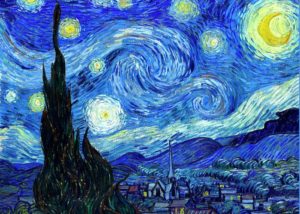
Hyperboles are exaggerated statements or claims that are not meant to be taken literally. Bharathi resorts to hyperbole when he suggests the following in his poem Yoga Siddhi (யோக சித்தி), written in December 1913: “To make gravel into glittering gems and copper base into solid gold and also to transmute with ease blades of grass into paddy stalks and lowly swines into lordly lions and mere sand into sugar sweet – Grant me the virtue true!”[7] In the first two lines of this poem, he speaks about alchemy; this coincides with the publication of The Journal of the Alchemical Society (1913-15). Alchemy failed as it was based on a misunderstanding of basic chemistry and physics. Whereas Bharathi merely uses this as a hyperbole, a scientist like Sir Issac Newton wrote several pages on alchemy through the course of his life. This was mostly because of Newton’s interest in material science. At that time, chemistry was still in its infancy and there wasn’t a clear-cut distinction between science, superstition, and pseudo-science. Indeed, with the modern understanding of Nuclear Physics, one might be able to convert lead to gold but the return would not be worth the investment! Bharathi has also emphasized in Yoga Siddhi that we should create more new skills in order to prosper.[[{"type":"media","view_mode":"media_large","fid":"9158","attributes":{"class":"media-image wp-image-13467","typeof":"foaf:Image","style":"","width":"442","height":"315","alt":""}}]] Vincent van Gogh’s painting The Starry Night
Characterization is a literary device used by poets to portray a character and to build on its image. In his வசன கவிதை (poems in the form of dialogues) titled Perceptions, in a song on the wind (see காற்று in வசன கவிதை) Bharathi has done this successfully. He uses the direct characterization, personifying “breath” as Kandan (the hero) and “life” as Valliammai (the heroine). The story begins with the representation of two ropes—one big and the other small—as a man and his wife, viz. Kandan and Valliammai. They live in complete harmony. Bharathi as the poet himself enters the scene and strikes a conversation with them. Kandan replies to him nonchalantly. When Bharathi departs from the scene for a brief moment and returns back and enquires about Valliammai, Kandan now appears before him as the Wind God and says that she is no more. Kandan then goes on to describe how prāṇa (‘life breath,’ ‘vital force’) sustains life.
In other episodes of the song, Bharathi describes wind in the form of a hurricane, a thunder storm, and a desert storm. He discusses the role of wind as a life-giver, as a life-destroyer, and yet how it is beyond destruction. He then describes the omnipresent nature of the wind in trees, flowers, ants, and all beings.
Bharathi further goes on to say that even if mountain air is good and sea breeze is medicinal, it is we humans who pollute the air. He also seems to have offered the solution to combat the issue here – “Plant more trees!” He goes on to worship the Wind God in the form of prāṇa (in-breath), apāna (out-breath), udāna (upward breath), samāna (balancing breath), and vyāna (diffusing breath).
After worshipping the Wind as the life force, he talks of the innumerable creatures present there, the tiniest of the tiny creatures present inside all creatures and the endless, the seemingly infinite nature of the macrocosm as well as the microcosm. Not only that, he also suggests the possible existence of life in other worlds.
In Perceptions (see இரண்டாங் கிளை: புகழ் under ஞாயிறு in வசன கவிதை), under a section titled A Paean of Praise, he has composed poems on the sun. In this poem he captures how the planets are formed from the sun and how they receive light from the sun:
“Oh Sun! All those who look at thy face
get thy light and become bright:
Earth, Moon, Mars, Mercury, Saturn,
Venus, Jupiter, Uranus and Neptune
Hundreds of Heavenly Houses,
at the touch of thy brilliant beams twinkle joyously.
As sparks flying from a fire-ball
These planets burst out of the Sun, some say.
The thief of time embraced them
and they lost much of their fiery brightness.
They did not lose their light altogether.
They only became less bright,
for there is nothing without light
Darkness itself is but light,
infinitesimal.”
He talks about how these planets circumambulate around the sun and explains the sun’s gravitational pull on the planets in this manner: “How they whirl about in their own orbits without transgressing the limits. They never pass beyond or cross the line of his power.”
When he says,
“Whatever his hand touches comes alive
The flower desires only him
The leaves, in his divine beauty
attain yogic beatitude!”
he uses imagery to describe the process of photosynthesis. He further goes on to explain the processes of evaporation and precipitation in the same song.
To be continued.
The author would like to express her thanks to ‘Padma Shri’ Dr. Y S Rajan for his constant encouragement, valuable inputs, and insightful feedback in putting together this essay in spite of his busy schedules. She would like to express her thanks to Śatāvadhani Dr. R Ganesh and Dr. Prasad Bapat for their detailed review and astute feedback. Edited by Hari Ravikumar.
The author would like thank Dr. G. Venkataraman for sending across the original Tamil text of the poem ‘Sirius’ from Dr. T N Ramachandran’s (TNR) book archives.
References
- Bharati Patalkal. Ed. T N Ramachandran (Sekkizhar Adi-p-podi). Thanjavur: Tamil University, 1989.
- மகாகவி பாரதியார் கவிதைகள், நியூ செஞ்சிரி புக் ஹவுஸ் (பி) லிட்.
- Kalam, A P J Abdul; Rajan, Y S. The Scientific Indian: A Twenty-First Century Guide to the World Around Us. New Delhi: Penguin India, 2011.
- Hawking, Stephen. The Theory of Everything. New Delhi: Jaico Publishing House, 2007.